
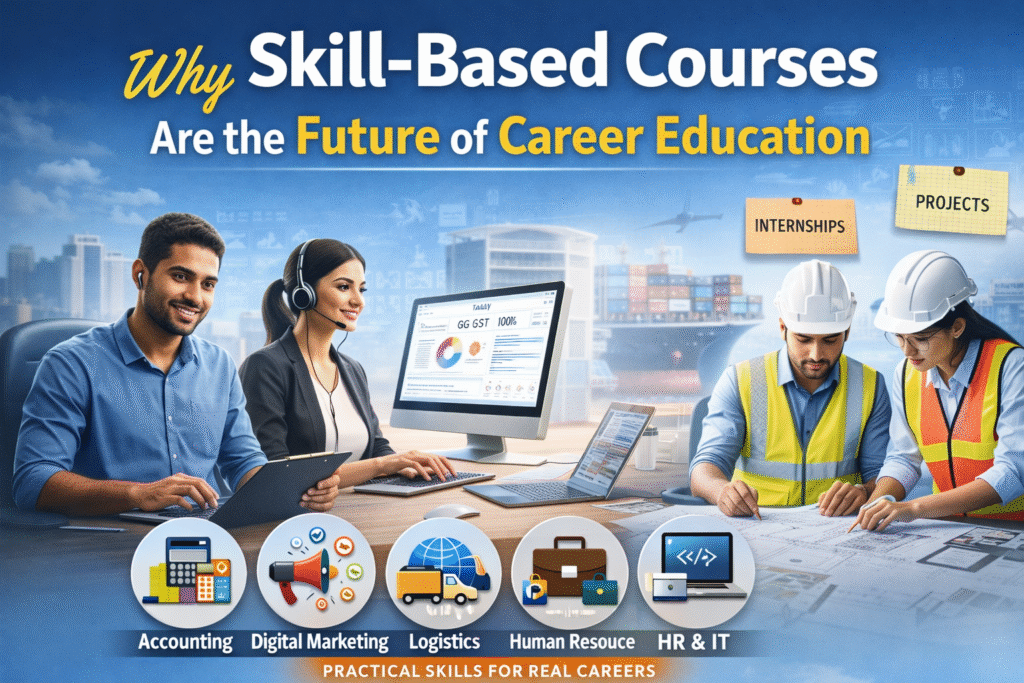
The education landscape is changing rapidly. In the past, students mostly focused on traditional degree programs that required several years of study. While degrees still hold value, many employers today prefer candidates who have practical knowledge and industry-ready skills. This shift has increased the popularity of skill based courses among students and job seekers.
Skill-based learning focuses on real-world applications instead of only theoretical concepts. These programs train students to perform actual job tasks, which makes them more confident and employable.
The Growing Demand for Practical Skills
Industries are evolving faster than ever due to technology and globalization. Companies now need employees who can quickly adapt to new systems, tools, and workflows. Because of this, organizations often look for candidates who already have hands-on experience.
Skill-based courses provide training in areas such as accounting, digital marketing, logistics, human resource management, and computer applications. These programs help learners develop practical abilities that can be directly applied in the workplace.
Faster Entry into the Job Market
One major advantage of skill-oriented education is that it allows students to start their careers sooner. Traditional academic paths may take three to five years, while many professional courses can be completed within a shorter period.
After completing a skill-based program, students can begin working in entry-level positions and continue learning through real work experience. This approach helps them grow professionally while earning income.
Industry-Relevant Curriculum
Another important benefit of skill-based training is that the syllabus is often designed according to industry needs. Students learn tools, software, and processes that companies currently use.
For example:
- Accounting courses include computerized accounting and taxation systems.
- Digital marketing courses teach social media marketing, SEO, and online advertising.
- Logistics programs focus on supply chain operations and transportation management.
This practical approach ensures that students are prepared for real job responsibilities.
Importance of Internships and Practical Exposure
Many professional training institutes include internships as part of their programs. Internships help students understand workplace environments, improve communication skills, and gain confidence.
When learners participate in real projects or office work, they develop problem-solving abilities and professional discipline. Employers often value this experience when hiring new candidates.
The demand for skill based courses will continue to grow as industries focus more on productivity and practical expertise. Students who invest time in learning job-oriented skills can build strong careers without waiting many years for opportunities.
Choosing a course that combines practical training, modern technology, and placement support can significantly improve career prospects in today’s competitive job market.